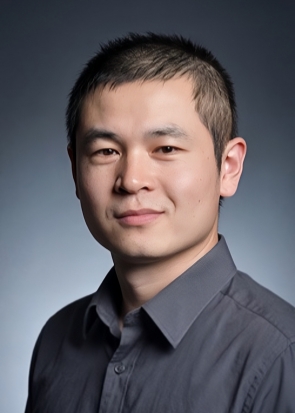
丰培强
个人简介
2004年9月- 2008年7月,山东农业大学,学士
2008年9月- 2016年1月,中国科学院植物研究所,博士
2016年7月- 2022年8月, 哈佛医学院细胞生物学系/HHMI,博士后
2022年8月- 2023年6月, 哈佛医学院细胞生物学系/HHMI,研究助理
2023年6月-至今,中国科学院分子植物科学卓越创新中心,研究员
研究工作
光合作用为地球上几乎所有的生物提供物质和能量,同时维持着大气中氧气与二氧化碳的平衡,是支撑地球生态系统的关键。叶绿体作为光合自养生物(包括藻类和绿色植物)特有的细胞器,不仅是光合作用的主要场所,还参与植物脂质合成等重要代谢过程。过氧化物酶体是细胞次生代谢的核心枢纽,主要负责脂肪酸氧化、植物激素合成与活性氧淬灭,是植物早期生长发育和响应环境胁迫所必需的重要细胞器。此外,过氧化物酶体与叶绿体之间交叉互作、协同参与光呼吸等多条代谢途径,对调节光合作用碳循环和氮代谢至关重要。
研究组长期致力于研究调控叶绿体和过氧化物酶体功能稳态与交叉互作的分子机制。实验室以拟南芥和油料作物为研究对象,采用细胞生物学、生物化学、蛋白质组学和结构生物学等综合技术手段,集中探索以下几个科学问题:
1. 叶绿体脂类合成与转运途径的分子机制;
2. 过氧化物酶体基质蛋白跨膜转运的分子机制;
3. 过氧化物酶体膜稳态,尤其是膜蛋白转运与降解的机理;
4. 叶绿体与过氧化物酶体互作调节光呼吸途径的机理,及其在提高农作物光合碳同化效率方面的应用和分子设计策略;
主要成果
1. Wang, C., Huang, A., Lin, L., Ou, J., Zhang, Q., Li, Y., Liang, C., Xu, X., Wang, W., Fan, M., Zhang, L#., & Feng, P#. (2026). Structural basis of plastid Mg2+ transport by the magnesium channel MGT10 in Arabidopsis. Proceedings of the National Academy of Sciences, 123(48), e2633248123.
2. Chen, J., Feng, Y., Zhang, Y., Gao, J., Ou, J., Wu, W., Li, C., Song, S., Tai, L., Rifat, M. H., Akhter, D., Hu, J., Feng, P#., Shen, X. X#., & Pan, R#. (2026). Structure-guided discovery of protein functions in plants. The Plant Cell, 38(2).
3. Du, W., Cao, L., Zhou, Y., Jackson, S., Naeem, M., Chen, Z., Yang, Y., Glynn, J. M., Porter, K. J., Zhang, R., He, Q., Liu, M., Xu, J., Liang, W., Feng, P., Osteryoung, K. W., & Chen, C#. (2025). Enhanced chloroplast FtsZ-ring constriction by the ARC6–ARC3 module in Arabidopsis. Proceedings of the National Academy of Sciences, 122(26), e2425129122.
4. Skowyra, M.L., Feng, P. and Rapoport, T.A#., (2023). Towards solving the mystery of peroxisomal matrix protein import. Trends in Cell Biology. pp.S0962-8924.
5. Feng, P#., Wu, X., Erramilli, S.K., Paulo, J.A., Knejski, P., Gygi, S.P., Kossiakoff, A.A. and Rapoport, T.A#., (2022). A peroxisomal ubiquitin ligase complex forms a retrotranslocation channel. Nature, 607(7918), pp.374-380.
6. Feng, P#., Skowyra, M.L. and Rapoport, T.A#., (2022). Structure and function of the peroxisomal ubiquitin ligase complex. Biochemical Society Transactions, 50(6), pp.1921-1930.
7. Gao, Y., Skowyra, M.L., Feng, P. and Rapoport, T.A#., (2022). Protein import into peroxisomes occurs through a nuclear pore–like phase. Science, 378(6625), p.eadf3971.
8. Ouyang, M., Li, X., Zhang, J., Feng, P., Pu, H., Kong, L., Bai, Z., Rong, L., Xu, X., Chi, W., Wang, Q. and Zhang, L#., (2020). Liquid-liquid phase transition drives intra-chloroplast cargo sorting. Cell, 180(6), pp.1144-1159.
9. Feng, P., Guo, H., Chi, W., Chai, X., Sun, X., Xu, X., Ma, J., Rochaix, J.D., Leister, D., Wang, H., Lu, C. and Zhang, L#., (2016). Chloroplast retrograde signal regulates flowering. Proceedings of the National Academy of Sciences, 113(38), pp.10708-10713.
10. Guo, H., Feng, P., Chi, W., Sun, X., Xu, X., Li, Y., Ren, D., Lu, C., David Rochaix, J., Leister, D. and Zhang, L#., (2016). Plastid-nucleus communication involves calcium-modulated MAPK signalling. Nature Communications, 7(1), p.12173.
11. Chi, W., Li, J., He, B., Chai, X., Xu, X., Sun, X., Jiang, J., Feng, P., Zuo, J., Lin, R., Rochaix, J.D. and Zhang, L#., (2016). DEG9, a serine protease, modulates cytokinin and light signaling by regulating the level of ARABIDOPSIS RESPONSE REGULATOR 4. Proceedings of the National Academy of Sciences, 113(25), pp.E3568-E3576.
12. Xu, X., Chi, W., Sun, X., Feng, P., Guo, H., Li, J., Lin, R., Lu, C., Wang, H., Leister, D. and Zhang, L#., (2016). Convergence of light and chloroplast signals for de-etiolation through ABI4–HY5 and COP1. Nature Plants, 2(6), pp.1-7.
13. Chi, W., Feng, P., Ma, J. and Zhang, L#., (2015). Metabolites and chloroplast retrograde signaling. Current Opinion in Plant Biology, 25, pp.32-38.
14. Sun, X., Feng, P., Xu, X., Guo, H., Ma, J., Chi, W., Lin, R., Lu, C. and Zhang, L#., (2011). A chloroplast envelope-bound PHD transcription factor mediates chloroplast signals to the nucleus. Nature communications, 2(1), p.477.

Copyright © 2002-
中国科学院分子植物科学卓越创新中心 版权所有
地址:中国上海枫林路300号(200032)
电话:86-21-54924000
传真:86-21-54924015
Email: webmaster@cemps.ac.cn